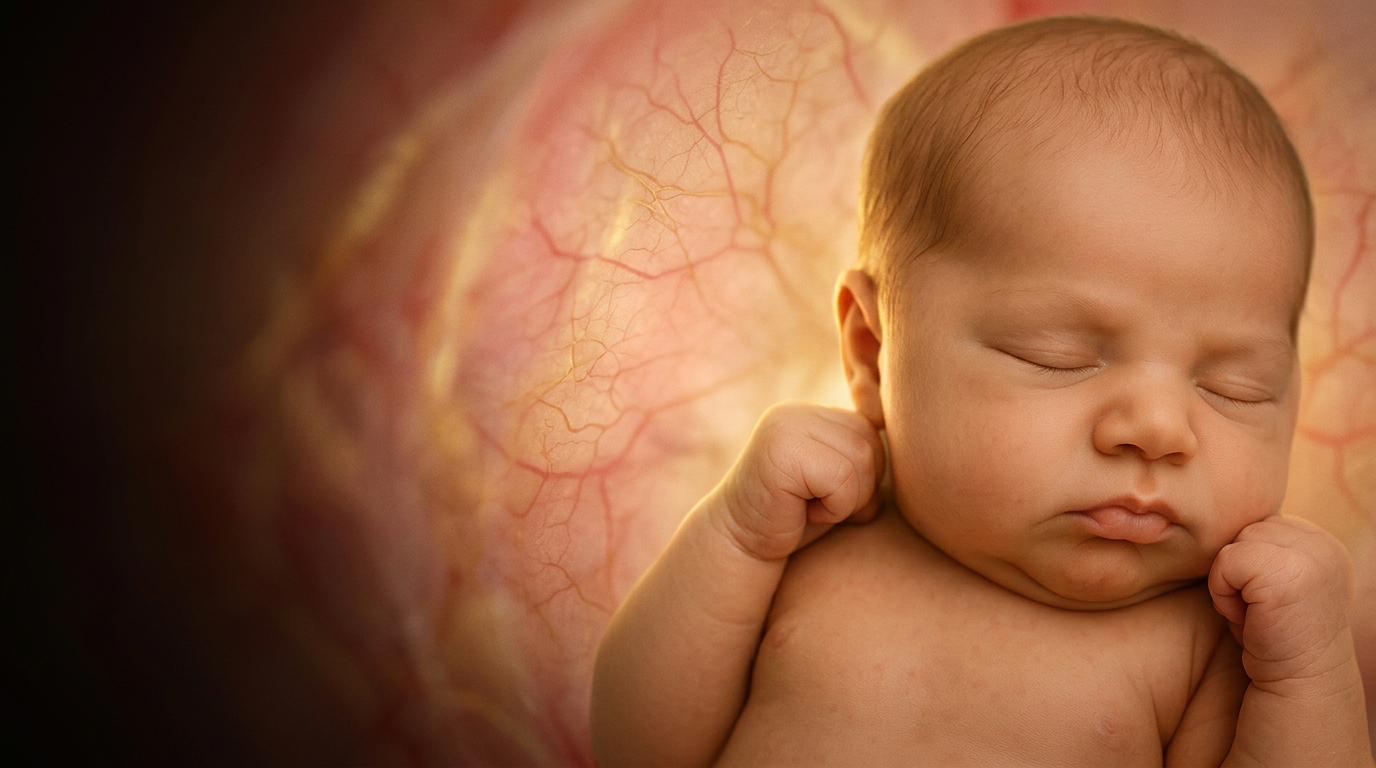
8K Ultrasound — your scan, painted photoreal.
The honest, science-grounded answer: what an 8K ultrasound actually is, how it's made, how accurate it really is, what it costs, and where to get one. Built on a pipeline tuned for ultrasound — not a one-tap filter.
Real scan on the left, 8K portrait on the right.
Drag to compare. Each pair is one parent's source 3D scan next to the 8K portrait our pipeline painted from it — same baby, every time.
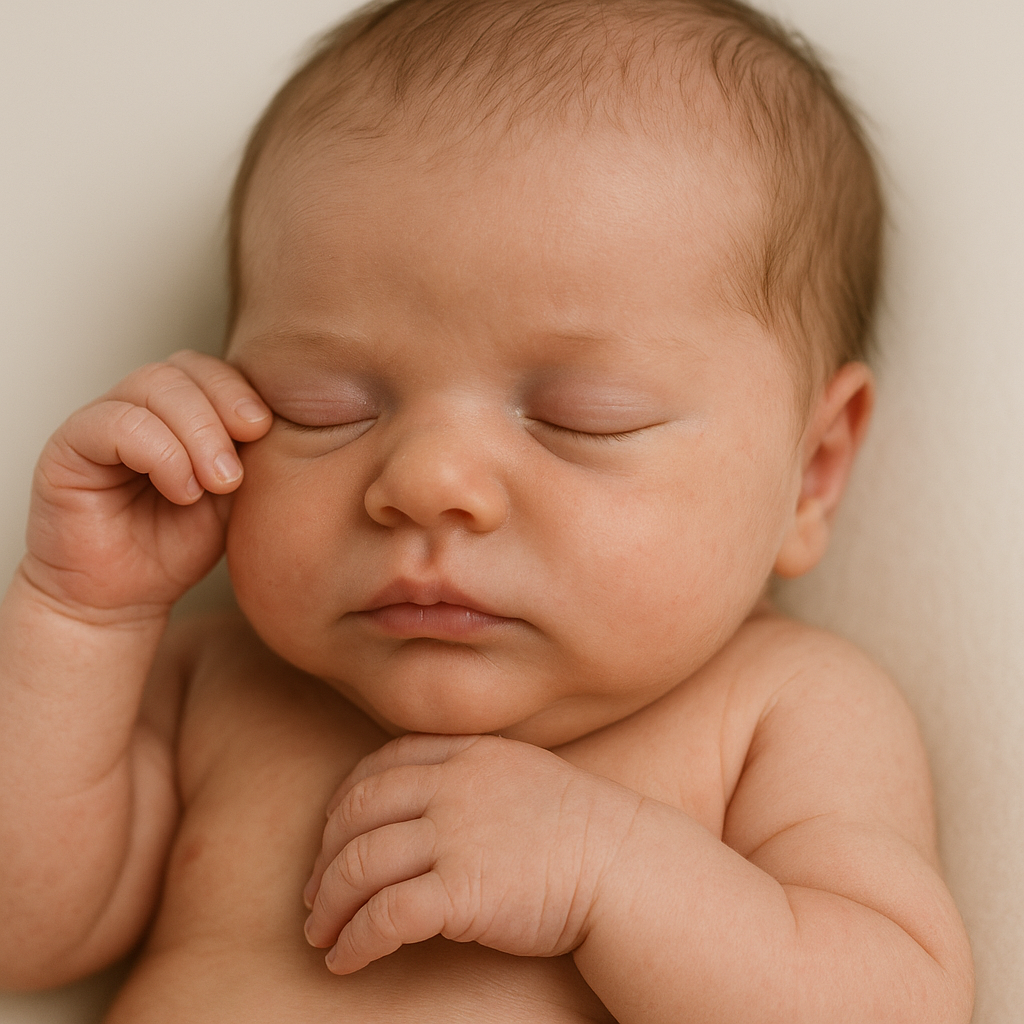
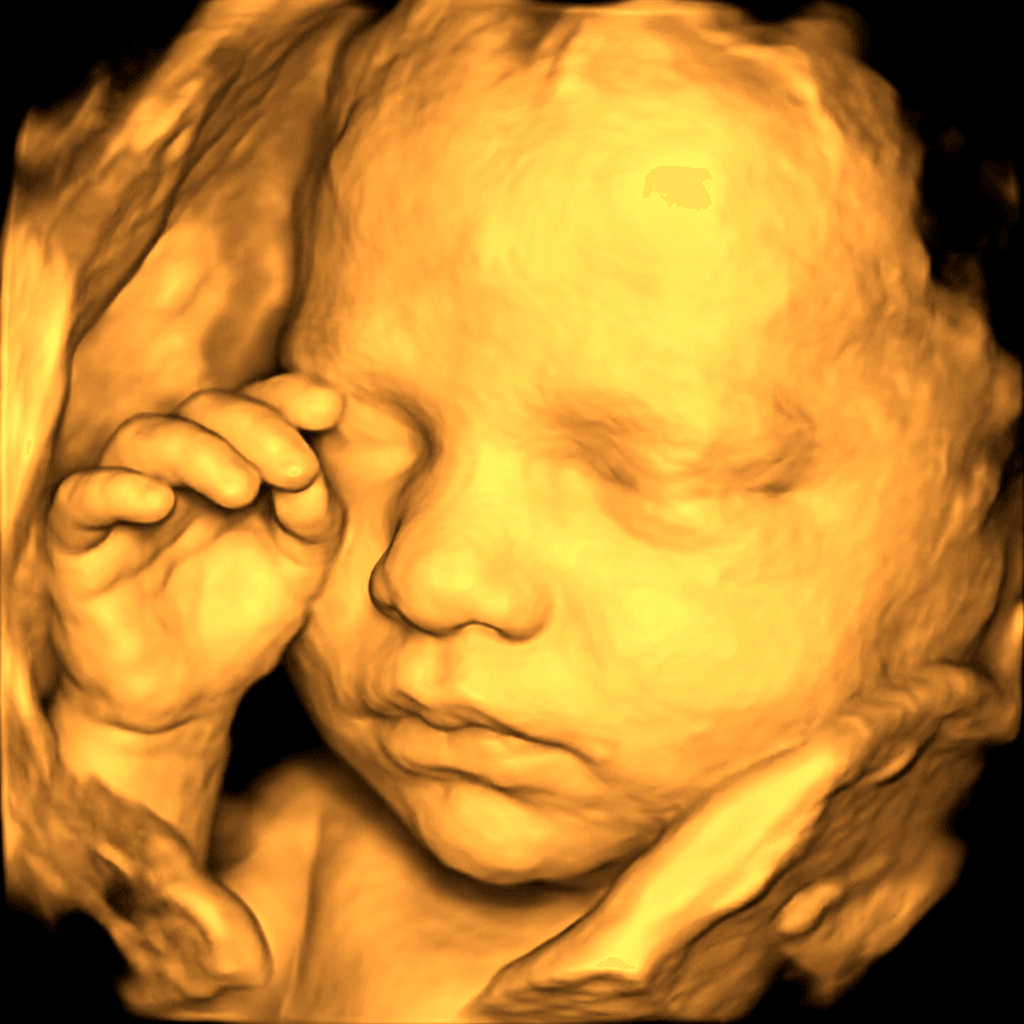
Hand on cheek · 32 weeks

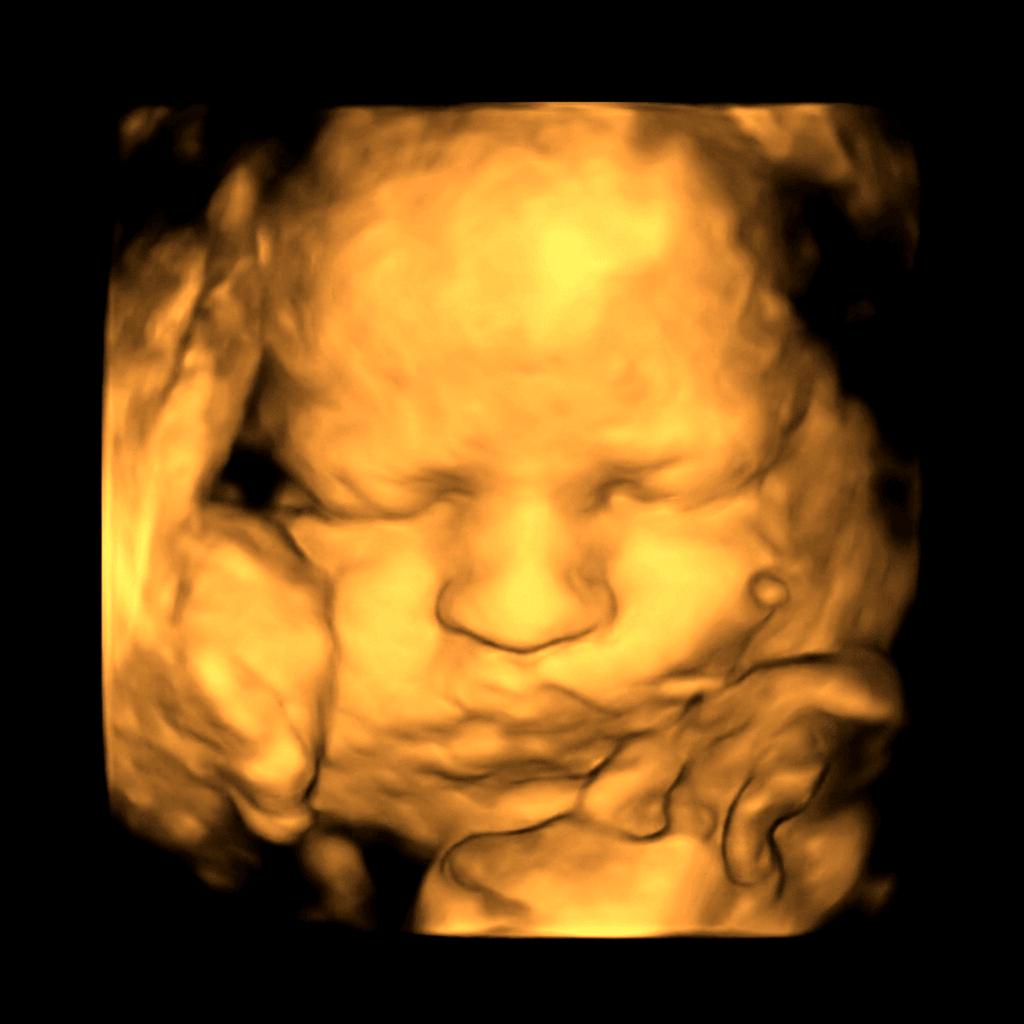
Pouting profile · 33 weeks
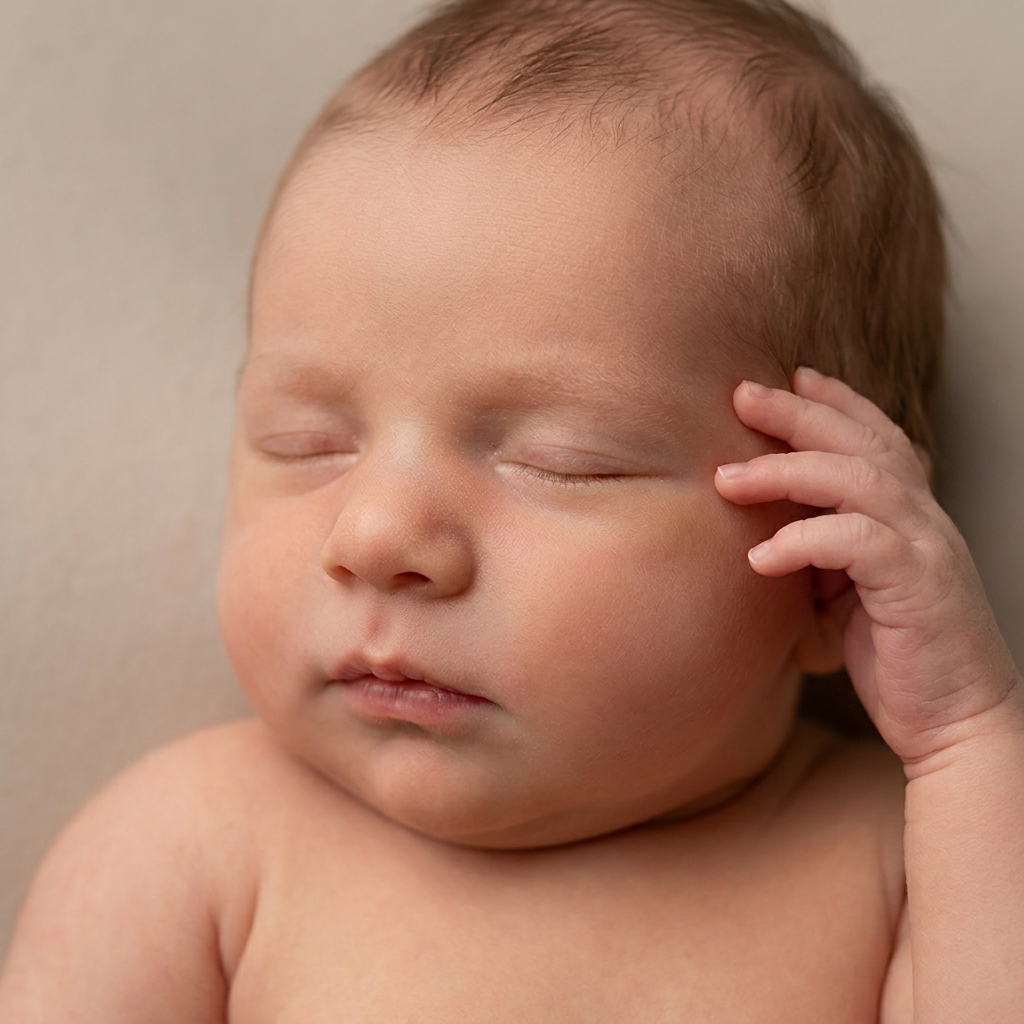

Sleeping pose · 34 weeks
Artistic interpretation · Not a medical prediction
What “8K” actually means.
“8K” is a resolution — 7680 × 4320 pixels, print-grade. There is no 8K scanner; the scan is your ordinary 3D / 4D session. The 8K is the resolution we render and upscale the final portrait to, so it holds up as wall art and framed prints.
We're specific about this on purpose. Some sites imply an 8K machine exists — it doesn't. What's genuinely new isn't the scanner; it's the quality of portrait you can now build from a standard scan, if you process the ultrasound the way ultrasound actually needs to be processed.
An ultrasound isn't a photo.
Decades of fetal-imaging research describe exactly why a raw scan can't just be “turned into” a face. Drop it into a generic AI image tool and it does the only thing it can — guess. These are the problems a real ultrasound pipeline has to solve first.
Tissue speckle
Ultrasound's grainy “snow” isn't random noise — it's tissue-dependent interference that breaks ordinary photo de-noisers.
Occlusion
A hand, the cord, or an acoustic shadow can hide half the face. Read it naively and AI invents a smile where a fist actually was.
Distortion
Scanners assume one fixed sound-speed; real tissue bends it. That's literally why noses read wider on a scan than in life.
Built for ultrasound — anchored by Identity Lock.
We use a frontier image model like everyone can — the difference is the ultrasound- tuned pipeline we wrap around it. Each step mirrors a technique proven in the published fetal-imaging literature, and it's the part a one-tap filter skips.
1 · Quality gate
Unusable scans are caught before anything is painted — no portrait is built on a frame that can't support one.
2 · Speckle & shadow correction
We clean ultrasound's tissue-dependent speckle and flag acoustic shadows first — the same problems clinical imaging research solves, that a one-tap filter ignores.
3 · Landmark detection
We find your baby's real eyes, nose and mouth on your actual scan — and let your studio confirm them before a single pixel is rendered.
4 · Identity Lock™
The portrait is anchored to those landmarks — to HER face, not a generic AI baby. Upload two scans of the same baby and we cross-reference them for a tighter lock.
5 · Heritage colouring
Ultrasound is grayscale — it holds no colour at all. So skin tone and hair come from the details you provide, as an artistic choice. We never pretend to “know” them.
6 · Render → up to 8K
Only now do we render on a frontier image model and upscale toward 8K print resolution (Studio tier) — the same super-resolution approach validated on fetal ultrasound.
What we can — and can't — promise.
What it captures
The shape and proportionsof your baby's face — that's genuinely in the scan, and it's why parents recognise the nose or lips after birth.
What it can't
True colour. A grayscale scan holds no skin tone, hair or eye colour — those are an artistic, parent-guided choice, never a prediction. And there is no validated “match %” — anyone who quotes one is guessing.
An 8K ultrasound portrait is a likeness, not a forecast— and the reason families trust the image they frame is that we're honest about exactly that.
8K ultrasound questions, answered honestly.
Deliver 8K portraits under your own brand.
Add the Identity Lock pipeline to the 3D / 4D scans you already take — white-label, same-day, from $39/mo. No new equipment, no scan-room time.
An 8K ultrasound portrait is a non-diagnostic keepsake — an artistic interpretation rendered from a real scan, not a medical prediction or a substitute for prenatal care. Keepsake imaging is not a substitute for the scans your OB/GYN orders. Consult your OB/GYN.